Home / Kitchen Renovation Guides / Reusing Cabinets
Can existing kitchen cabinets be reused?
Check the carcass first.
Often, yes, but the answer depends on what sits behind the doors. It is one of the first questions when a kitchen looks worn but the layout still works. Ivan Bodnar is an independent home renovation specialist with approximately 15 years of hands-on residential renovation experience. He answers it one cabinet at a time during a free on-site assessment in Murrumbeena. This guide covers what he checks, why the sink base gets the closest look, and which parts are usually practical to keep or replace.
or call 0413 142 055
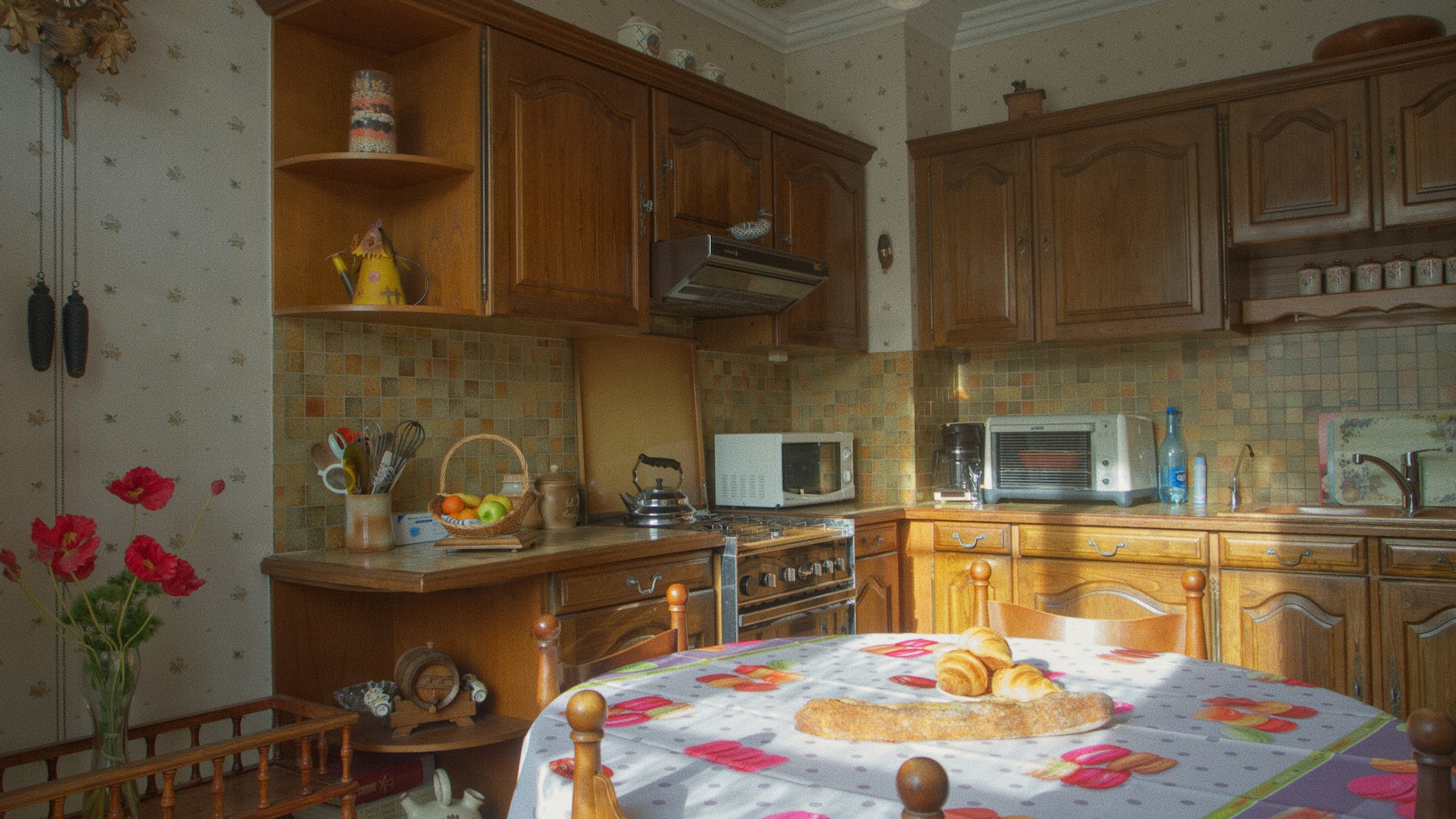
An older, lived-in kitchen with dark timber cabinets and a tiled splashback. From the front, cabinets like these can look sound. Whether they can stay comes down to the carcass, the fixings and the sink base.
Start with the box, not the doors
The carcass is the cabinet body: its sides, base, back and top rails. Doors, handles and benchtops can all be changed. A weak carcass, though, will undermine anything new fixed to it. That makes it the first thing to check, using a few practical questions:
Panels — are the sides and base flat and firm, or swollen and crumbling at the edges?
Joints and fixings — do screws and fittings still hold, or are the holes worn out?
Square and level — do the cabinets sit level, and do the doors close evenly?
Wall cabinets — are they still firmly fixed to the wall?
Interior — are shelves sagging, or are there stains that point to an old leak?
The sink base is usually where the decision is made
No other cupboard in the kitchen gets as wet as the one under the sink. A slow drip from a waste fitting or tap, or water running off the bench edge, can soak into a particleboard base for years before anyone notices. Look for a soft or swollen floor panel, lifting edge tape, staining, a musty smell or a back panel that has come away.
When the sink base is damaged, it is usually more practical to replace that one cabinet than to patch it, even if the rest of the run stays. The moisture also has to be traced back to where it is coming from. A leak in the supply or waste plumbing is a plumbing job, and fixing the carpentry will not solve it. Ivan does not carry out licensed plumbing or electrical work. Those parts of a kitchen renovation are done by appropriately authorised specialists. See licensed trades for plumbing and electrical work.
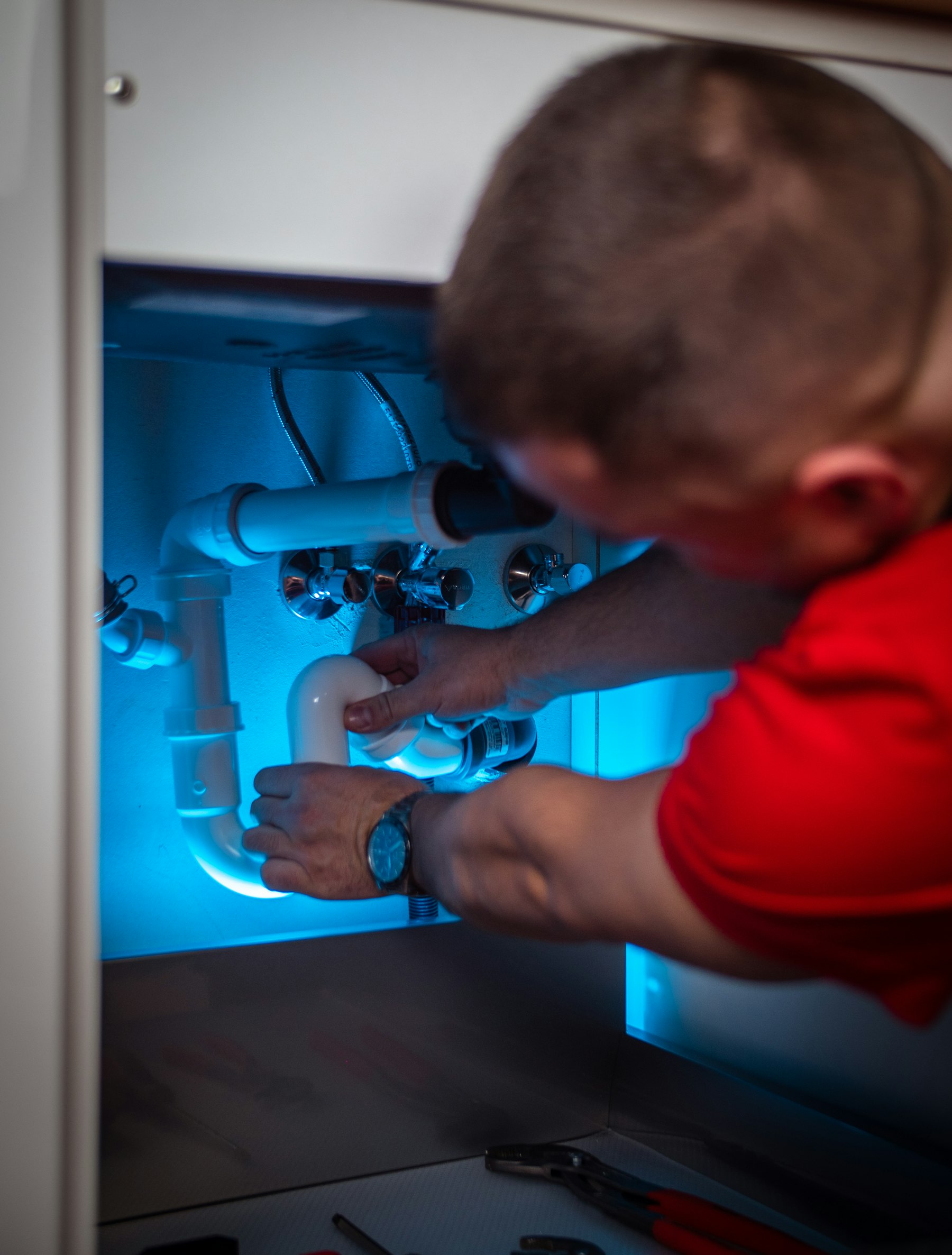
Typical sink-base area: drain pipes and fittings inside the cupboard
What is usually kept, refreshed or replaced
These are common patterns, not fixed rules. The right decision depends on what the assessment finds and how the kitchen needs to work for you.
Carcasses
These can often stay if they are dry, square and firmly fixed. A single damaged cabinet, most often the sink base, can be replaced while the rest of the run is kept.
Doors and drawer fronts
Worn or lifting fronts are often replaced on sound carcasses. This changes how the kitchen looks without rebuilding it, as long as the new fronts suit the existing openings.
Hinges and drawer runners
Worn hardware is a common reason doors sag and drawers stick. Replacing it is often part of reusing cabinets properly.
Benchtop
A new benchtop can go on existing cabinets if they are level and strong enough to carry it. Swollen edges around the sink often show where water has got in. More on splashbacks and surface replacement.
Kickboards
Mopping water often damages these. If the floor is uneven along the kickboard, the floor may need checking too.
Layout
Moving cabinets makes reuse harder. Read whether you can keep your existing kitchen layout.
Some things only show once cabinets come out
An inspection cannot reveal every concealed issue. A carcass can look sound from the front while the wall behind it, the floor under the plinth or the services in the cavity tell a different story. If a cabinet comes out, what is found may change what is practical to reuse.
Ivan explains this before the written quotation is prepared, so the options in it are based on what could actually be seen and checked. Scope, permits and licensed trade requirements vary from one project to another. See also what may be found behind kitchen cabinets.
Honesty means explaining the options and their limits. If a cabinet is worth keeping, Ivan will tell you. If it isn’t, he will explain why, so you can weigh the practical options yourself.
Read next, before your assessment
→ What new kitchen finishes sit on
→ What needs to be removed in a kitchen renovation
Would you like your existing cabinets looked at in person? Request a kitchen renovation quote. The on-site assessment and the written quotation that follows it are both free.