Interior and exterior painting.
Preparation decides the finish.
Paint shows whatever is underneath it. Unless the surface is prepared first, patched plasterboard, cracked cornices, stained ceilings and weathered timber will all show through a new coat. Ivan Bodnar is an independent home renovation specialist with approximately 15 years of hands-on residential renovation experience. He checks the surface, explains the preparation it needs and suggests suitable materials.
or call 0413 142 055
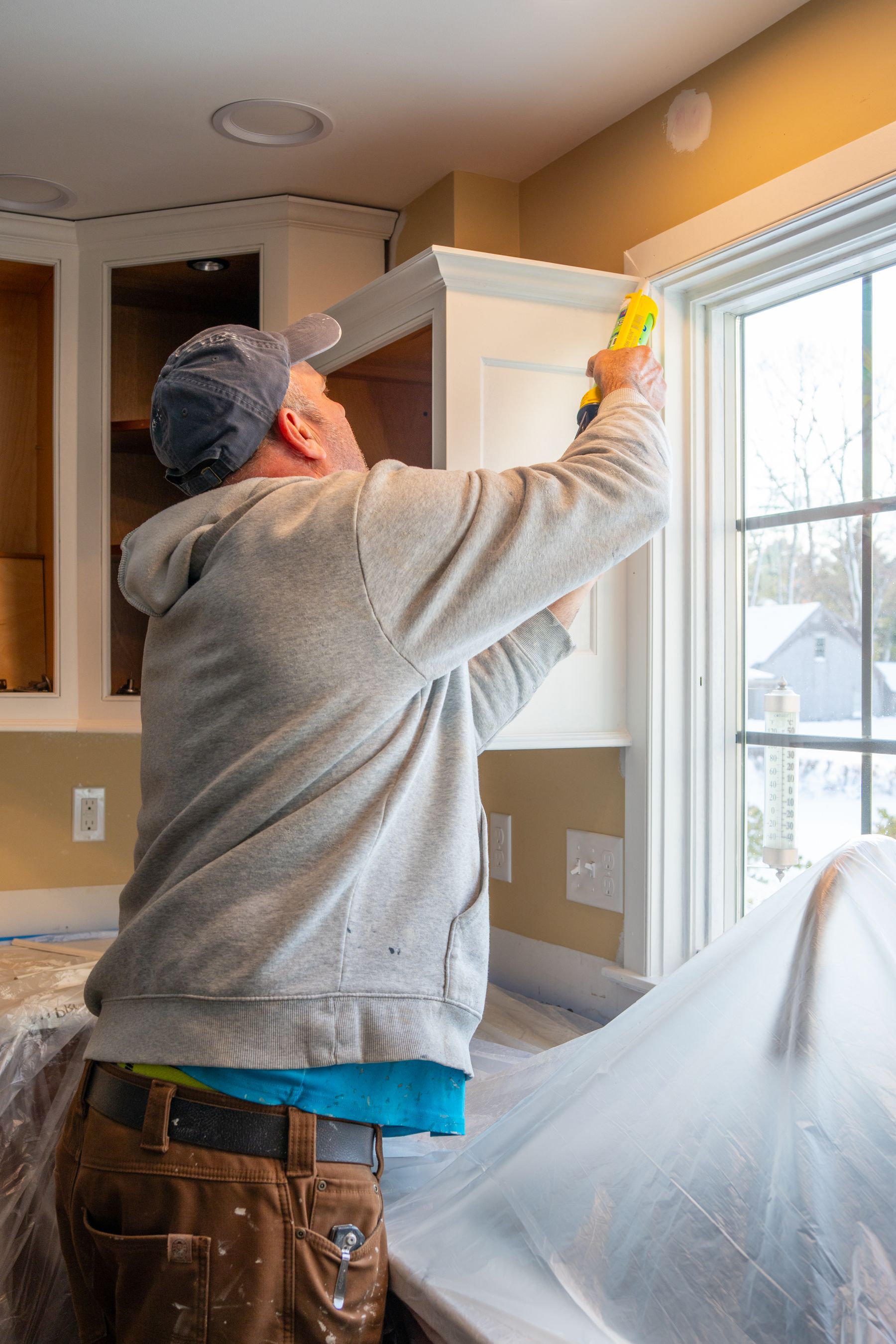
Reference photo: sealing a trim joint, with the surrounding surfaces covered before finishing
Often the last layer of a kitchen renovation
This website focuses on kitchen renovation in Murrumbeena. Painting usually comes up as part of that work. Once new cabinetry, a replacement splashback or plasterboard repairs are finished, the walls, ceiling and trims around them generally need attention as well.
Interior and exterior painting are also offered as related capabilities. The approach is the same throughout: check what the paint will sit on, prepare the surface properly, then choose materials that suit the surface and its exposure.
Moisture and staining
Water marks, mould or peeling near sinks, windows or external walls point to a moisture source. If you paint over it before finding the cause, the same problem usually comes back.
Substrate condition
Plasterboard, render, timber and previously painted surfaces all behave differently. Any loose, flaking or chalky coating has to be dealt with before a new one goes on.
Surface preparation
This means filling, sanding, finishing joints, cleaning grease off kitchen walls and priming where needed. It is usually most of the work, and it shows in the result.
Suitable materials
Primers and paints are chosen to suit the surface and where it is: kitchen walls near cooking, ceilings, trims and doors, or exterior timber that faces sun and rain.

Reference photo: compound being smoothed on a wall before painting
Different surfaces, different exposure
Interior. Walls, ceilings, cornices, doors and trims, including new or repaired plasterboard after kitchen work. Joints and patches need to be properly finished, because they tend to show under kitchen lighting. Plasterboard installation and plastering is often the step before the paint.
Exterior. Weatherboards, fascias, eaves and timber trims are exposed to sun and rain. The existing coating and the timber beneath it are checked for soundness before any preparation or material is suggested.
Decking, pergolas, fencing and other outdoor improvements are also related capabilities. They are discussed separately as part of a specific enquiry.
Painting after a kitchen renovation
For more on checking a surface before any new finish goes on, read What New Kitchen Finishes Sit On.
When does painting happen in a kitchen renovation?
It usually happens once the cabinetry, splashback and plasterboard repairs are finished and fixtures are in place, so later work doesn’t mark the walls. The exact order depends on the scope agreed for your kitchen.
Can freshly patched plasterboard be painted straight away?
No. Patches and joints must be fully dry and sanded, and they usually need priming. If that step is skipped, the joints tend to show through the finished coat.
What about power points, lighting and plumbing?
Electrical and plumbing work is done by appropriately authorised specialists, and the painting is planned around it. Ivan does not perform licensed electrical or plumbing work himself. See Licensed Trades for Plumbing and Electrical Work.
What if something turns up once the old coating comes off?
The written quotation is prepared after a free on-site assessment. An inspection cannot reveal every concealed issue. If damage only becomes visible during preparation, Ivan discusses it with you before the scope changes.
Kitchen Renovation Murrumbeena is the website of Ivan Bodnar. Ivan is an independent sole trader and does not personally claim unverified trade licences or builder registration. Licensed plumbing and electrical work is performed by appropriately authorised specialists. Scope, permits, insurance and licensed trade requirements vary from project to project and are confirmed for each job.
01 Kitchen Renovation · 03 Splashbacks and Surfaces · 08 Plasterboard and Plastering · Behind the Cabinets · All Services
If your walls, ceilings or exterior timber need attention, you can request a kitchen renovation quote or call 0413 142 055 to talk it through with Ivan.