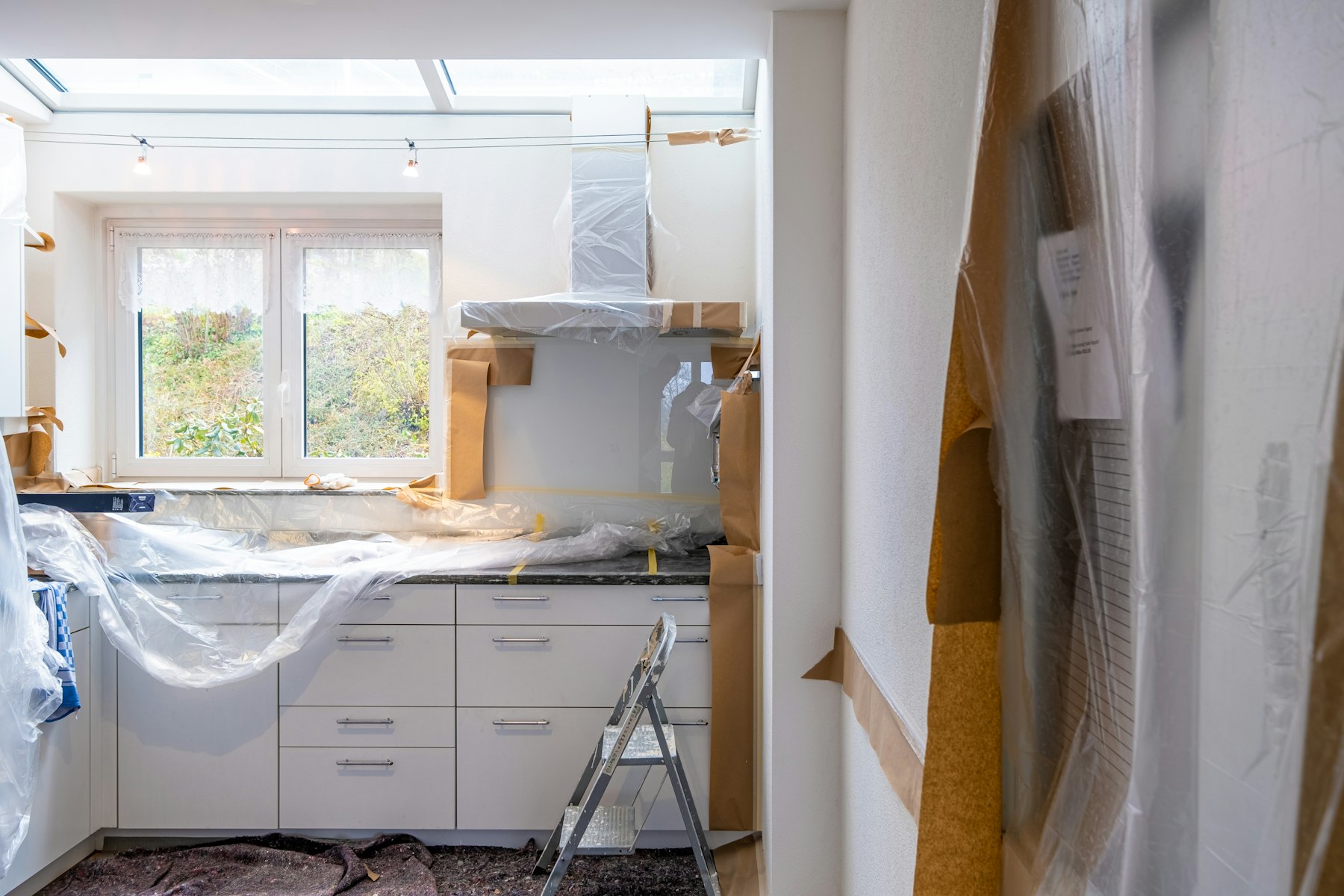
Reference photo: cabinetry and benches protected while kitchen work is carried out
Home / Kitchen Renovation Guides / Sale or Rental Updates
Updating a kitchen before sale or rental.
Decide on condition first.
If a property is about to go on the market or to a new tenant, the kitchen is often the room that looks most tired. A new benchtop, splashback or set of doors can be worth doing, but the decision should be based on the condition of what sits underneath, not on appearance alone. This guide covers the practical options Ivan Bodnar discusses with Murrumbeena owners and what he checks before recommending any of them.
or call 0413 142 055
01
Look at what the kitchen sits on, not only what it shows.
A kitchen being prepared for sale or a new tenant has a different brief from one you plan to live with for years. The usual aim is a sound, clean and workable kitchen with a sensible scope, not a full redesign. That makes the existing condition more important, not less. A new finish fixed over a swollen sink base, a damp wall or a loose substrate can fail early and lead to rework.
At a free on-site assessment, Ivan checks moisture, substrate suitability, service access and underlying damage. He then explains which items are practical to keep, repair or replace. Your written quotation is prepared after that. The reasoning behind each check is set out in What New Kitchen Finishes Sit On.
Four common updates, and what each one depends on.
These are the updates that most often suit a kitchen being prepared for sale or rental. None of them is the right choice by default. Each depends on the condition behind the surface.
A Surface replacement
A worn or chipped laminate benchtop can often be replaced while the base cabinets stay. Whether that works depends on the carcasses being level, sound and dry enough to carry the new top, and on whether the sink and cooktop positions can stay as they are. See Kitchen Splashbacks and Surface Replacement.
B Splashbacks
Replacing a dated or cracked splashback is a contained job, but taking the old one off exposes the wall behind it. Damaged plasterboard or old adhesive may need repair before new tiles or panels go on. See Tiling for Kitchens and Living Areas.
C Cabinetry repair
Doors, hinges, drawer runners and kickboards can often be repaired or replaced one at a time. If a carcass has swollen from a leak, replacing that unit is usually more practical than covering it up. See Can Existing Kitchen Cabinets Be Reused?
D Painting
Painting the walls and ceiling, and in some cases suitable cabinet surfaces, can freshen the room. The result depends on surface preparation: cleaning, repairing and priming to suit the material. See Interior and Exterior Painting.
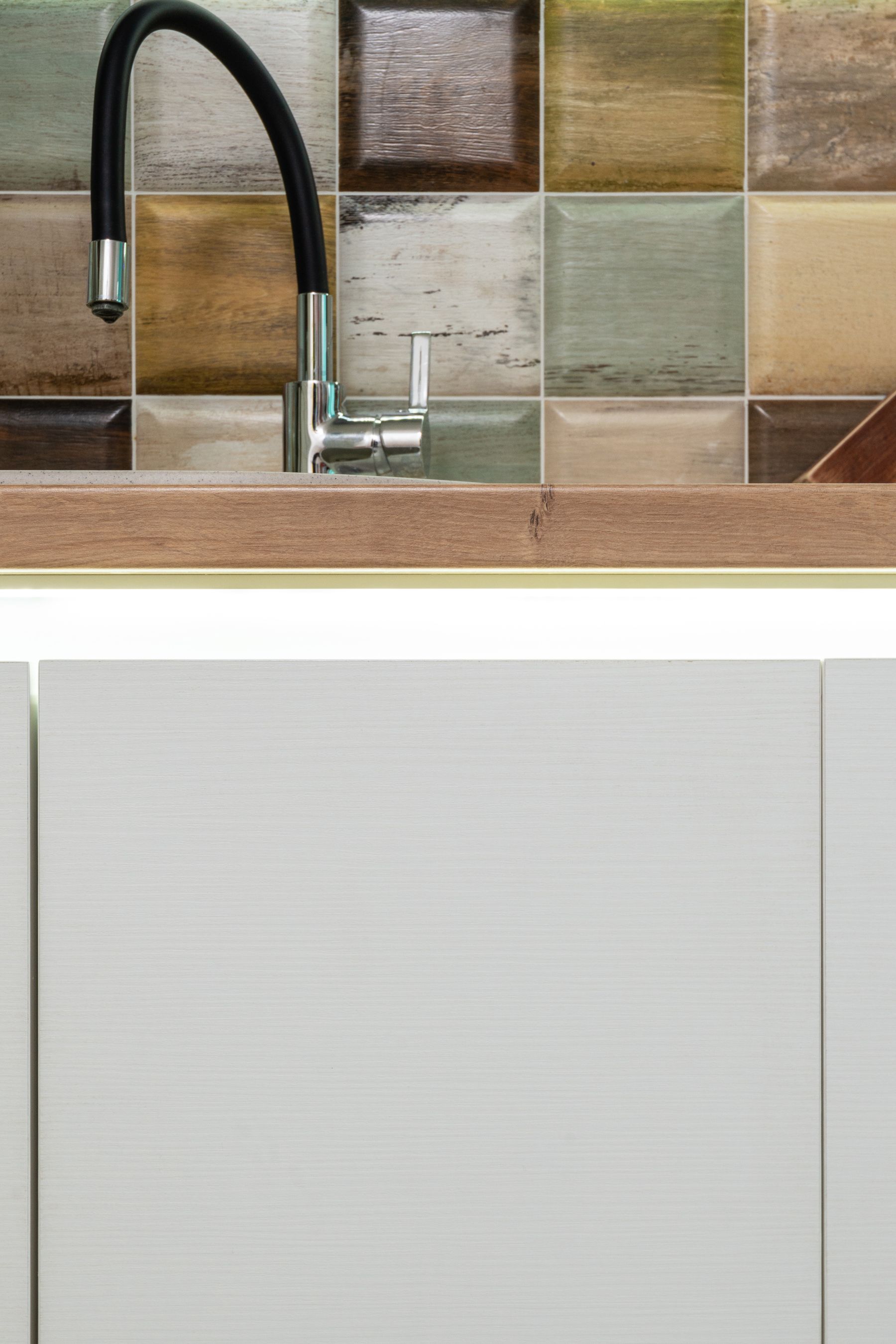
Reference photo: a kitchen tap against a tiled splashback
Small changes can still involve the services.
Moving a tap, adding a power point near the bench or changing a cooktop connection is regulated work. Licensed plumbing and electrical work is carried out by appropriately authorised specialists, not by Ivan personally.
Ivan is an independent sole trader and does not personally claim trade licences or builder registration. He identifies where licensed trades are needed so that the work can be allowed for in the scope.
Questions to answer before you choose an update.
01 Is there any sign of water damage around the sink, dishwasher or fridge space?
02 Is the floor level at the kickboard, and does it run under the cabinets?
03 Can the existing layout stay, so the services stay where they are?
04 Which items are only worn on the surface, and which are damaged underneath?
05 What needs to be removed, and what could that expose?
06 Is there a date the property needs to be ready by? Raise it at the assessment so it can be discussed openly with the scope.
An inspection cannot reveal every concealed issue. What turns up once cabinets or a splashback come out can change the scope. Project scope, permits, registration, insurance and licensed trade requirements vary, and contract, insurance and approvals wording is checked for each project. More detail is in What May Be Found Behind Kitchen Cabinets.
If you are preparing a Murrumbeena property and want to know what is practical for its kitchen, request a kitchen renovation quote. Ivan will review your enquiry and discuss an on-site assessment with you.