Home / Kitchen Renovation Guides / What Gets Removed
What needs to be removed
in a kitchen renovation?
Less than you might think, or more than you hoped. It depends on what the existing kitchen is sitting on. Removal is not set before anyone has looked. It is decided during the on-site assessment, when Ivan Bodnar checks which parts of your Murrumbeena kitchen can stay, which have to go, and which need a licensed trade before they can be touched at all.
or call 0413 142 055
Removal is decided on site, not in advance
During a free on-site assessment, Ivan works through the kitchen in the same order every time:
1. How the kitchen needs to work. If the layout suits your household, more of the existing structure may be worth keeping. See keeping the existing layout.
2. The existing condition. This covers swelling at the sink base, loose carcasses, damaged wall linings at the splashback, and the floor at the kickboard.
3. Services. Where the water, waste and power connections are, and whether anything has to be disconnected or moved.
4. What the new finishes will sit on. If a substrate is unsuitable, it comes out, even when the surface in front of it looks fine.
What usually comes out, what is assessed, what can stay
Each kitchen is different, but the same components come up again and again. The written quotation lists what is being removed, so you can see the scope before any work starts.
Usually removed: benchtops being replaced, splashback tiles or sheeting, the sink and tap (once disconnected), worn doors, drawer fronts and kickboards.
Assessed case by case: cabinet carcasses, shelving, wall linings behind the splashback, and floor coverings that run under the cabinets. More on this in reusing kitchen cabinets.
Often kept: a layout that already works, sound carcasses in good condition, and service positions that do not need to move.
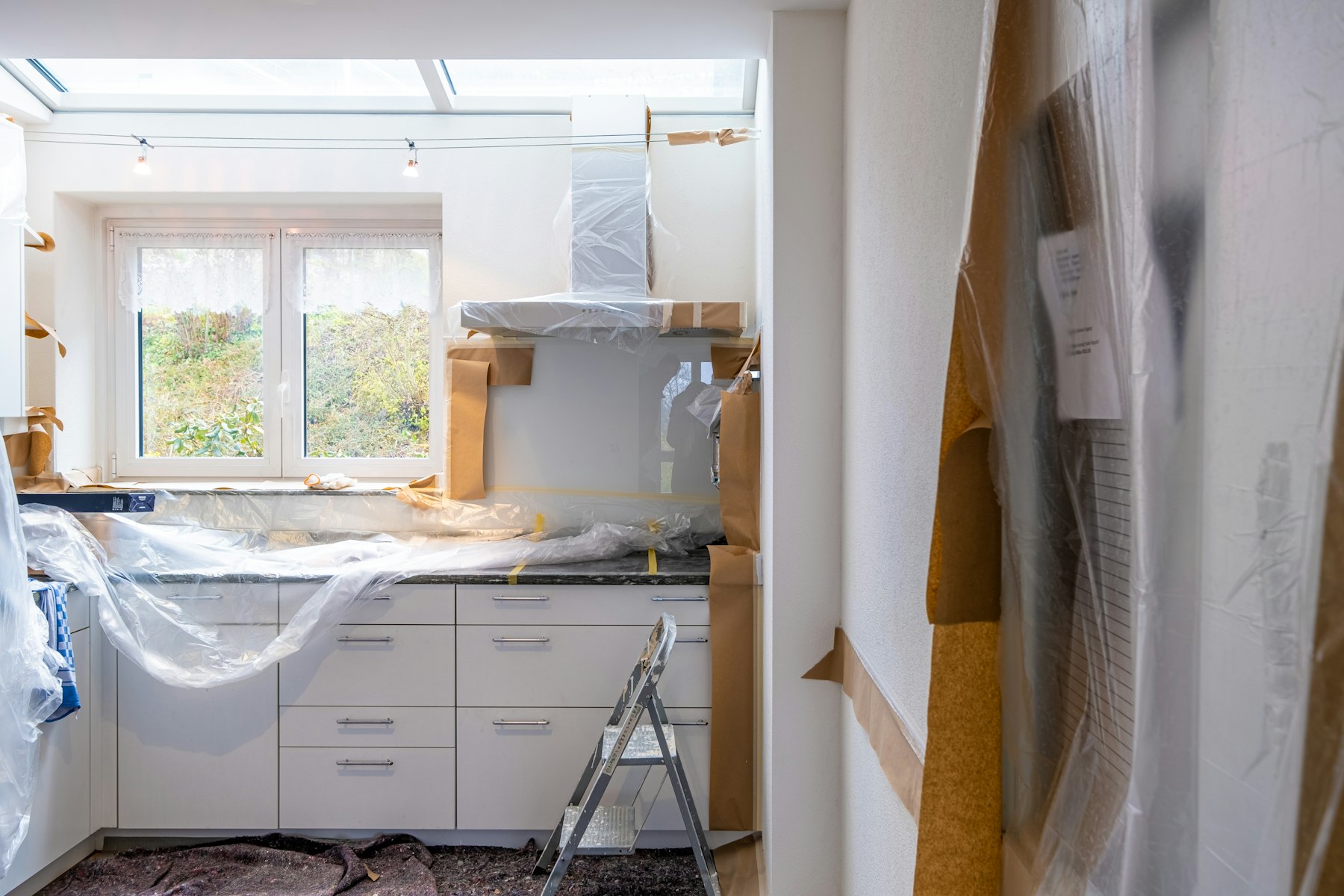
Reference photo: surfaces covered with sheeting and paper during kitchen work
Protecting the rest of the house
Strip-out makes dust and debris, and old units are heavy to carry out. Before removal starts, floors, adjoining rooms and anything that is staying get covered. The access path through the house is agreed with you, and you are kept informed as each part comes out. The aim is a clean starting point for the new kitchen and no damage to the rooms around it.
Service disconnections come first
Ivan is an independent sole trader and does not claim plumbing or electrical licences or builder registration. Regulated work is handled by appropriately authorised specialists. See licensed trades.
What Ivan handles
Assessing the existing kitchen, planning the removal order, protecting the property, and removing cabinetry, benchtops and splashbacks once the services are safely disconnected. He also checks what the new finishes will sit on.
What authorised specialists handle
Disconnecting and capping water, waste and gas connections, isolating and disconnecting hardwired appliances and power points, and any relocation or reconnection of those services.
If a material is suspect, it stays put until it is checked
Older kitchens can have wall sheeting, floor coverings or backing boards whose make-up is unknown. Ivan does not offer asbestos removal. If a material is suspected of being hazardous, it is not cut, drilled or broken. You will be advised to have it assessed and, if needed, removed by appropriate specialists before the kitchen work in that area goes ahead. Any change to the scope is then discussed with you. What may be found behind kitchen cabinets covers other conditions that can turn up.
An inspection cannot reveal every concealed issue. Some conditions only show once cabinets and linings come out. Scope, permits, registration, insurance and licensed trade requirements vary from project to project, and are confirmed for each kitchen.
If you’d like to know what would come out of your own kitchen, send Ivan an enquiry about an on-site assessment.