Plasterboard and plastering.
Making good the wall the old kitchen leaves behind.
When wall cabinets come down or a splashback comes off, the wall underneath is rarely ready for a new finish. You may find fixing holes, torn paper facing, old adhesive and patches that were never finished properly. Kitchen renovation in Murrumbeena is the main focus of this site. Plasterboard installation and plastering is a related capability, and it is usually part of a kitchen job.
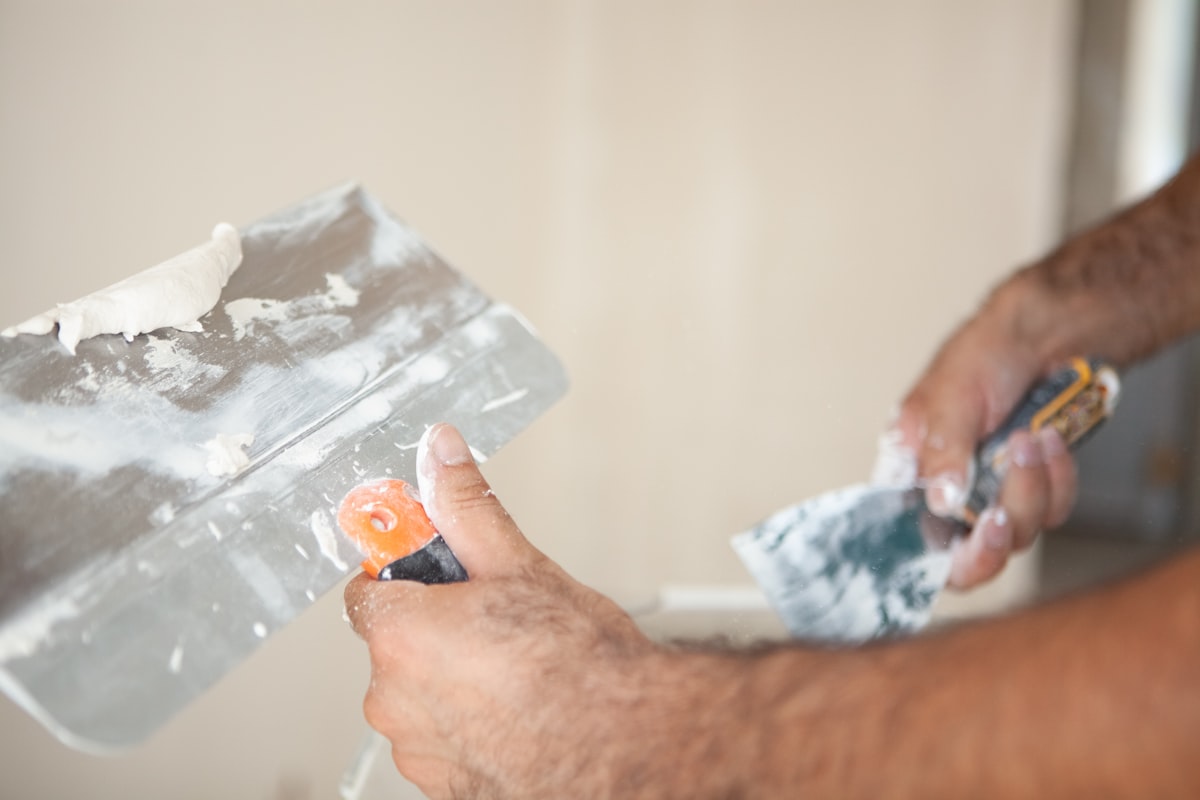
Reference photo: compound being smoothed with plastering trowels
Patching fixing holes, damaged facing and old adhesive marks after cabinets or splashbacks are removed.
Replacing damaged sections or installing new non-structural linings where patching would not hold.
Jointing, setting and sanding to suit what goes on next, whether that’s paint or tile.
What happens to the wall once the old kitchen is off
1. Look at what is exposed. Once the cabinets and splashback are off (see what needs to be removed), Ivan checks the lining for soft spots, staining, loose sheets and damage around old fixings.
2. Check for moisture first. Walls near a sink or dishwasher can hold moisture that isn’t visible. Plaster over a damp patch and the new finish is likely to fail. What may be found behind kitchen cabinets covers this in more detail.
3. Patch or replace. Small damage can be set and made good. Where the sheet itself is compromised, replacing a section is often the more practical option. You’ll get a clear explanation of which applies and why.
4. Coordinate with services. If new power points or plumbing are planned, that work is done by appropriately authorised specialists before the wall is closed and finished.
5. Prepare for the finish. The level of surface preparation depends on whether the wall will be painted, tiled or fitted with a panel splashback.
Preparing for paint is different from preparing for tile
Suitable materials and preparation are chosen for the finish going on top. This is the core idea in what new kitchen finishes sit on.
Walls to be painted
Paint shows every ridge and patch edge, especially under kitchen lighting. Joints and repairs need to be feathered out and sanded so the wall reads as one surface. Related: interior and exterior painting.
Walls to be tiled
Tiles depend on a sound, flat substrate that suits the adhesive. Loose material or old paint layers may need attention first. Related: tiling for kitchens and living areas.
Splashback zones
Behind the sink and cooktop, moisture and heat matter. The wall is checked before a new splashback is chosen. Related: kitchen splashbacks and surface replacement.
Linings and finishes, not structure
This work covers wall linings and surface preparation. It does not include structural changes, wall removal or engineering advice. Any wall that may be load-bearing needs an appropriately qualified practitioner. Ivan does not carry out asbestos removal. If an older lining is suspected of containing asbestos, it needs specialist assessment before work continues.
Ivan Bodnar is an independent sole trader and does not claim unverified trade licences or builder registration. Licensed plumbing and electrical work is done by appropriately authorised specialists. See licensed trades for plumbing and electrical work.
An inspection can’t reveal every concealed issue. Scope, permits, registration, insurance and licensed trade requirements vary from project to project. Contract and approvals wording is checked for each job.
Ivan has approximately 15 years of hands-on residential renovation experience. You deal with him directly, from the free on-site kitchen assessment to your written quotation. If your kitchen walls need making good, send an enquiry and Ivan will review it.
RELATED: Kitchen renovation · Layout & cabinetry · Flooring · Laundry renovations · Kitchen renovation questions