Tiling for kitchens and living areas.
Level and substrate first.
A new splashback or tiled floor is only as sound as the surface underneath it. Ivan Bodnar is an independent home renovation specialist with approximately 15 years of hands-on residential renovation experience. Before he suggests suitable materials, he checks the existing surface, the level and the substrate.
Tiling is a related capability on this site. The main focus is still kitchen renovation in Murrumbeena, and most tiling questions come up as part of that work.
What new tiles sit on
If a visible finish is replaced before moisture, substrate, service access and underlying damage have been checked, the result can be avoidable rework. The right scope depends on the inspection.
01 Level and flatness
A floor that dips at the kickboard, or a wall that bows behind the old splashback, will show through new tiles as uneven edges and wandering grout lines. Ivan checks both with a level and straightedge before setting out.
02 Substrate suitability
Old tiles, painted plasterboard, sheet flooring and timber boards all behave differently. Some can be prepared and tiled over. Others need to come out so the new tiles have a suitable base.
03 Moisture
Around sinks, dishwashers and external walls, Ivan looks for signs of past moisture before anything is covered over. A damp or damaged area needs attention first.
04 Service access
Power points, tap positions and pipework behind a splashback affect the set-out and the cuts. Any change to those services is handled by licensed trades.
05 Surface preparation and materials
Once the base is understood, the surface is prepared. Ivan then discusses suitable tiles, adhesive and grout based on how the room is actually used.
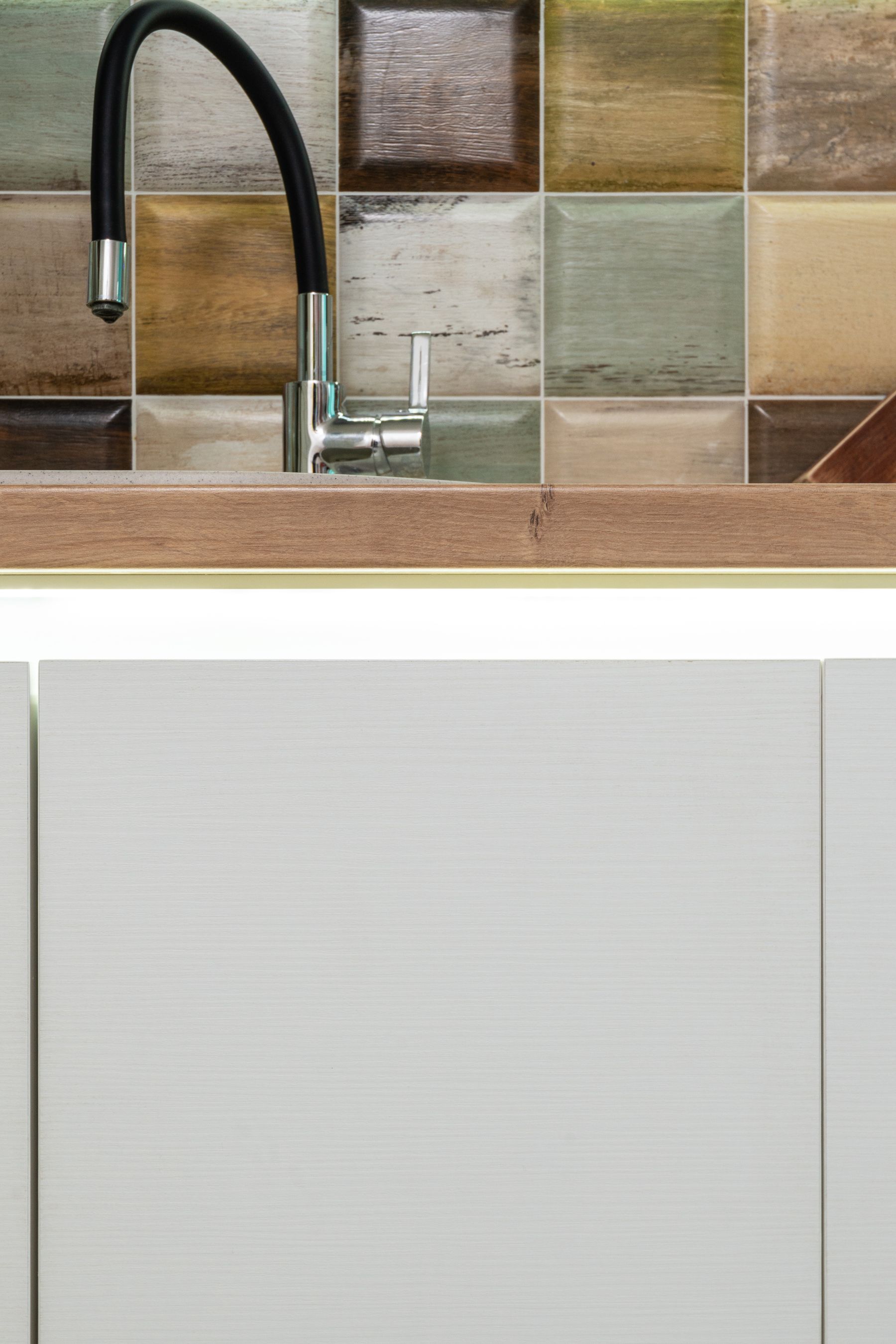
Junctions show the preparation
Typical splashback detail: square tiles meeting a tap and the cabinet trim.
The places where tiles meet taps, trims, benchtops and floor edges are where set-out and preparation show most. Ivan looks closely at these junctions during the on-site assessment.
Splashback or floor:
different surfaces, different checks
Kitchen splashbacks
“Can you replace the splashback?” Usually, yes. Once the old tiles come off, Ivan checks the wall behind them for damage, flatness and moisture, and works out how the new tiles line up with the benchtop, power points and window reveals.
More detail is on Kitchen Splashbacks and Surface Replacement.
Kitchen and living-area floors
“The floor is uneven” is a common starting point. Floor tiles have to deal with level changes, transitions into adjoining rooms, door clearances and the kickboard line under the cabinets. The substrate and its movement matter as much as the tile you choose.
See Flooring for other floor finishes.
Where tiling meets licensed trades
Moving a tap, adding a power point behind a splashback or relocating a dishwasher connection is licensed plumbing or electrical work. That work is done by appropriately authorised specialists, not by Ivan.
Ivan is an independent sole trader. He does not claim trade licences or builder registration that have not been verified. Find out how this is organised on Licensed Trades for Plumbing and Electrical Work.
An inspection can’t reveal every concealed issue. Removing old tiles sometimes uncovers damaged plaster, moisture or unexpected services. Scope, permits, registration, insurance and licensed trade requirements vary from project to project. Read What May Be Found Behind Kitchen Cabinets.
Related reading
Kitchen Renovation · Splashbacks and Surfaces · Bathroom Tiling · Flooring · What New Kitchen Finishes Sit On · On-site Kitchen Assessment · Your Written Quotation
If tiling is part of your kitchen plans, you can request a kitchen renovation quote or call 0413 142 055 to talk it through with Ivan. The on-site assessment is free, and the written quotation follows it.