Kitchen splashbacks and surfaces, checked from the wall out
Can the splashback be replaced? Usually, yes. But the new tiles or panels are only as sound as the wall behind them. Ivan Bodnar takes off the old finish, checks the substrate and wall condition, and does the surface preparation before choosing suitable materials for your Murrumbeena kitchen.
or call 0413 142 055
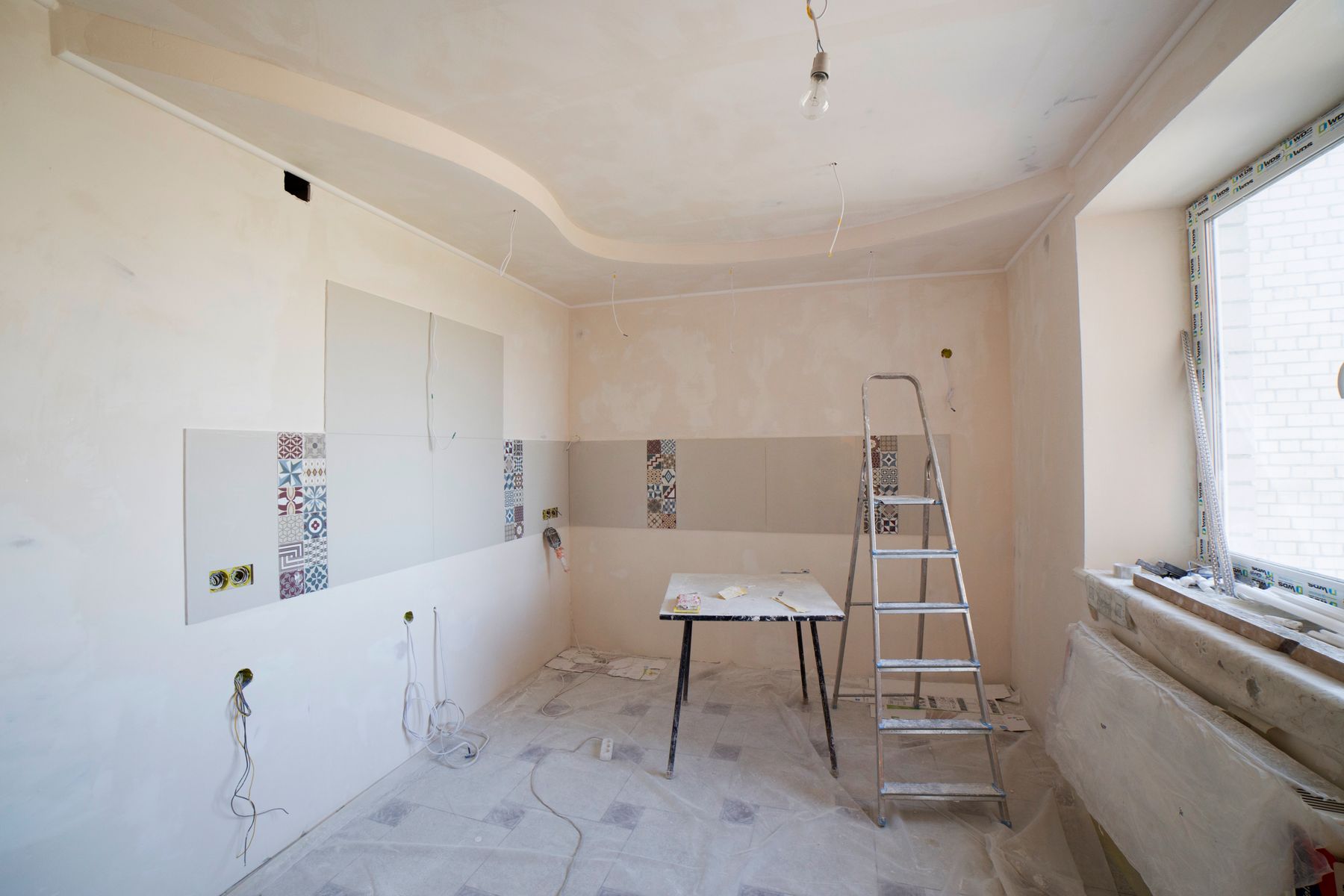
Reference photo: wall tiles going on over unfinished plaster, with wiring still exposed
What happens when an old splashback comes off
The scope gets clearer once the old finish is off. That is why the written quotation follows an on-site assessment and isn’t guessed from a photo.
01 — Protect and remove
Benchtops, cabinets and floors are covered first. Old tiles, adhesive or panels are then taken off in a controlled way, keeping damage to the wall behind as small as practical.
02 — Check the substrate
Is the plasterboard or render firm, flat and dry? Ivan looks for soft patches, old water marks near the sink, loose sheets and leftover adhesive that would stop new material bonding properly.
03 — Note services and openings
Power points, tap positions and any exposed pipework or wiring are recorded. If they need to move or be changed, that work goes to licensed trades.
04 — Prepare the surface
Repairs, patching or new plasterboard where it’s needed, then sanding, priming or waterproofing to suit the new finish. Surface preparation is the step that decides how long the splashback lasts.
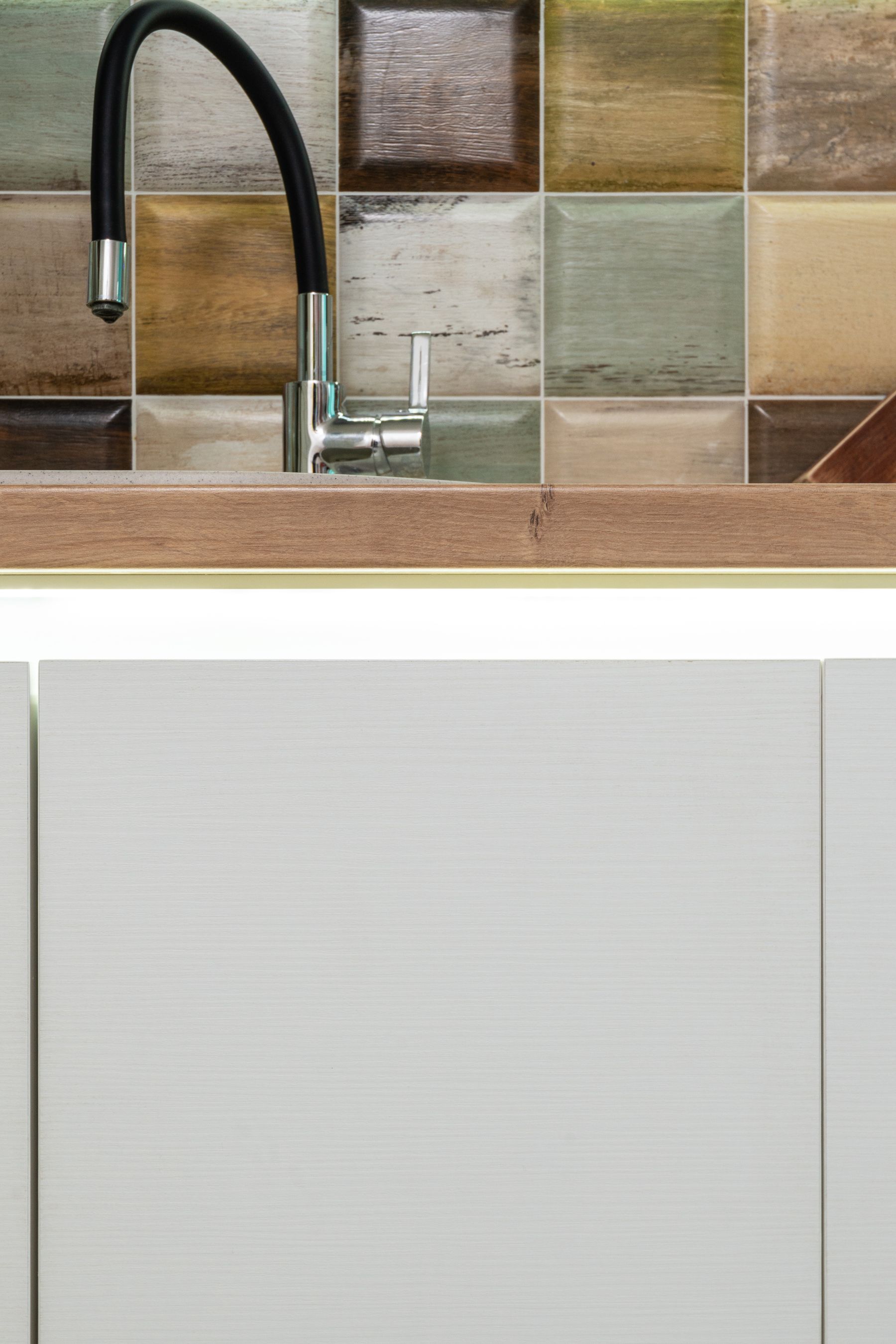
Reference photo: a tiled splashback where it meets the tap and benchtop
Choosing suitable materials for the wall you actually have
Behind the sink
This is the wettest part of the run, so how the joints and the benchtop edge are sealed matters as much as which tile you pick.
Near the cooktop
Heat and grease build up here. Choose a surface that copes with both and is easy to clean.
Worn or damaged benchtops
A chipped or swollen benchtop edge often means water has got in. Whether the benchtop is repaired, replaced or kept is worked out together with the splashback, because the two meet along one line.
Tiles or sheet surfaces
Each needs a different kind of substrate and preparation. Ivan explains the practical options and their limits for your wall before anything is ordered. More on tiling for kitchens.
Questions homeowners raise about surfaces
Can you replace the splashback without replacing the cabinets?
Often, yes, if the cabinets and benchtop are staying. The wall still needs checking once the old finish is off. If you’re weighing up the cabinets as well, see whether existing cabinets can be reused.
Can new tiles go straight over the old ones?
It depends on how sound and flat the existing tiles are, and on the height at the benchtop, power points and window sills. In many kitchens, removing them lets the substrate be checked properly.
Will the power points or tap need to move?
Any change to electrical or plumbing work is done by appropriately authorised specialists, not by Ivan personally.
When will I get a written quotation?
After the on-site assessment. Read how the written quotation is put together.
Some damage only shows once the old finish is off
An old leak behind the sink, crumbling plaster or a loose sheet can sit hidden behind tiles that look fine. Putting new finishes on before checking for moisture, substrate suitability, service access and underlying damage can lead to avoidable rework. So the right scope depends on inspection, and on what removal reveals.
If something unexpected turns up, Ivan explains what he has found and the practical options before work goes on. Read what may be found behind kitchen cabinets.
Ivan Bodnar is an independent sole trader. He does not personally claim unverified trade licences or builder registration. Licensed plumbing and electrical work is done by appropriately authorised specialists.
An inspection can’t reveal every concealed issue. Scope, permits, registration, insurance and licensed trade requirements vary from project to project, and are confirmed for each job.
What new kitchen finishes sit on · What needs to be removed · 02 Layout and cabinetry options · 01 Kitchen renovation in Murrumbeena
Thinking about a new splashback or a damaged benchtop? Request a kitchen renovation quote and Ivan can talk it through with you, starting with the wall that’s already there.